
Georgia's Shrunken Hopes

Michael Greenberg

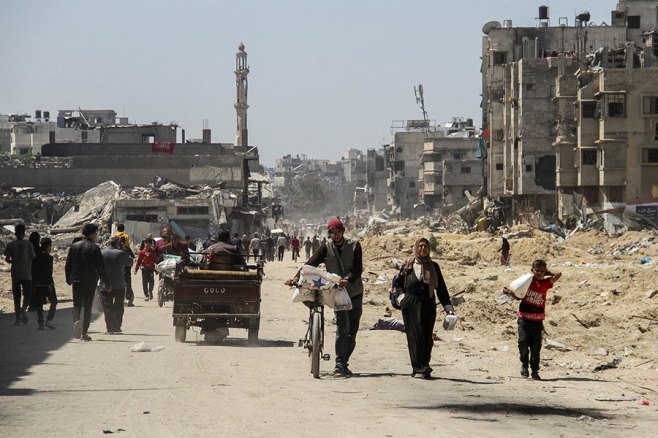
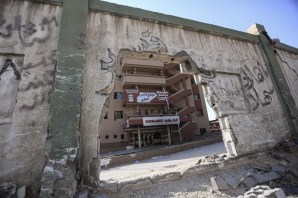
A refugee camp in Gori, Georgia, 2009; photographs by Alex Majoli from Georgian Spring, to be published by Magnum Photos and Chris Boot in December

More than fifteen months have passed since war broke out between Georgia and Russia. The war lasted five days, the amount of time it took for the Russian army to rout Georgia’s tiny, American-trained defense forces. It was the most serious military conflict in Europe since the Balkans. And yet, although tens of thousands of people are still displaced, and Russia is posing an increasing threat to Georgia’s oil pipelines, both the EU and the US may be powerless to prevent further threats to the country.

Read More

Read more » | Comments | November 20, 2009, 11:50 am

Glorious Ghosts

Colm Tóibín

The three gossips from The Ghosts of Versailles at the Wexford Opera Festival, Ireland, 2009 (wexfordopera.com)

Wexford is a small town on the sea in the south-east of Ireland and an unlikely place to host an opera festival. Yet since 1951 in late October the town has organized what has become for many opera-lovers an essential date in the calendar. The reason why it has remained important is not merely the intimacy of the setting, the general air of welcome and the strange sea-washed beauty of the old town, but the policy since the early 1970s to program three operas that have fallen beneath the radar, that are seldom or never performed.

Read More

Read more » | Comments | November 19, 2009, 5:08 pm

China: The Fragile Superpower

Christian Caryl

Obama as Chairman Mao

Some China watchers believe that China’s dramatically rising prosperity will inevitably make the country more open and democratic. President Barack Obama’s highly-scripted trip this week provided little to support that claim. As The Washington Post noted, in contrast to 1998, when Bill Clinton, standing in the Great Hall of the People, criticized the Tiananmen Square crackdown and “traded spirited jibes with President Jiang Zemin,” Obama and Hu Jintao held a “Chinese-style news conference of read statements, stares, and no questions.” Nor did the Chinese government make any concessions on the major issues—the valuation of China’s currency, pressure on Iran, action on climate change—that the White House was hoping to see addressed.

Read More

Read more » | Comments | November 19, 2009, 1:12 pm

Rome: A Funny Thing Happened on the Way to the Game

Stephen Greenblatt

Oliver amazed at the Dodger’s mode of ‘going to work’; etching by George Cruikshank from Oliver Twist

An American archaeologist friend here in Rome, where I’m spending my sabbatical, was working for a time in Salerno, in the south of Italy, and found himself annoyed by the thugs who lounged near the main square and approached him, when he intended to park there, offering, for a small fee, to “protect” the car from anyone who might wish to damage it. It was bad enough when he thought it was only he, a foreigner, who was treated to this shake-down, but, as he idly watched one day, my friend realized that the louts were equal-opportunity predators: they made the same offer to local businessmen, little old ladies, factory workers. And worse still, they went about their business within sight of the uniformed carabinieri who stood chatting with each other in front of the police station. My friend expressed his outrage to a Salernitano acquaintance: the nuisance was not an unfamiliar one in America, he complained, but it seemed unaccountable to have it take place under the gaze of the authorities. Look, the acquaintance said to him, with the resignation of a native, everyone has to make a living.

Read More

Read more » | Comments | November 18, 2009, 3:26 pm

Israel Without Illusions: What Goldstone Got Right

David Shulman

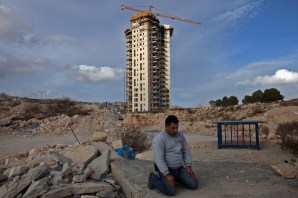
Detained Palestinians near an IDF post in Hebron, photographed by an Israeli soldier (Shovrim Shtika)

Questions of human rights abuses in Israel and the charges of war crimes put forward by the UN’s Goldstone report have produced little more than the usual disingenuous accusations of anti-Semitism. Even Moshe Halbertal, an unusually cogent Israeli participant-observer, takes the Goldstone commission to task in The New Republic for trying to link the Gaza campaign to the wider setting of the occupation and Israeli policies toward the Palestinians. “Why,” he asks, “should a committee with a mandate to inquire into the operation in Gaza deal with the Israeli-Palestinian conflict at large?”

Read More

Read more » | Comments | November 17, 2009, 12:30 pm

Copenhagen Crisis: Why the US Needs Cap and Trade

Tim Flannery

Caribou migration, Arctic National Wildlife Refuge, 2002;
photograph by Subhankar Banerjee from his series ‘Oil and the Caribou’

It is often argued that cap and trade legislation requires too many compromises with—and give-aways to—polluting corporations to pass the House and Senate, and that consequently it is ineffective at reducing greenhouse gas emissions. While environmentalists are failing to support cap and trade, those opposing action on climate change are fiercely attacking it. Yet such a system is essential when it comes to getting global action on climate change—not least at the increasingly imperilled climate summit in Copenhagen in December—for it delivers a transparent benchmark by which nations can judge each other’s commitment.

Read More

Read more » | Comments | November 16, 2009, 11:58 am

The Tender Art of David Park

Sanford Schwartz

David Park: Boston Street Scene, 1954; paintings from Helen Park Bigelow’s David Park, Painter: Nothing Held Back, just published by Hudson Hills Press

David Park (1911–1960) is one of those artists who isn’t widely known but whose work inspires a special loyalty and warmth of feeling among his admirers.

Read More

Read more » | Comments | November 13, 2009, 2:22 pm

Loans to the Poorest: Where Does the Money Really Go?

Sue Halpern and Nicholas Kristof
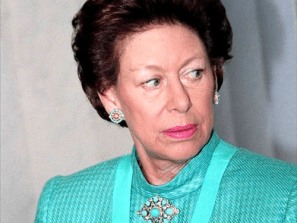
A marketing image from the microfinace organization Kiva, featuring Truphena Anyango, 29, in her pharmacy, Mikindani, Kenya, 2009 (kiva.org)

Sue Halpern and Nicholas Kristof have been engaged in an exchange about microfinance, following her recent NYR review of his new book (co-authored with Sheryl WuDunn), Half the Sky: Turning Oppression into Opportunity for Women Worldwide. The first part of their conversation can be found here. The next installment appears below.

Read More

Read more » | Comments | November 12, 2009, 4:26 pm

Why Health Care Reform is Going to the Dogs

Michael Tomasky

Canine checkup (independent.com)

So what did the House Blue Dogs do on the health care vote last Saturday? They were more supportive than one might think: Of the fifty-two-member coalition, twenty-eight voted yea and twenty-four nay. Jim Cooper of Tennessee, the Blue Dog whom I identified in my piece in The New York Review as being among the most knowledgeable legislators in the House on the issue, told The Washington Post’s Ezra Klein: “This was one of the best votes I ever cast.”

That majority-level of support from these moderates came, however, with an asterisk. It seems fair to say that many of them were made more comfortable with the overall bill because of the stringent anti-abortion amendment approved earlier Saturday evening and sponsored by Blue Dog Democrat Bart Stupak of Michigan. That amendment would bar women from receiving coverage for abortion services even if they have private insurance, if that insurance has been obtained with the help of federal subsidies.

Read More

Read more » | Comments | November 12, 2009, 9:01 am

Midway: Message from the Gyre

Chris Jordan

An albatross chick on Midway Atoll, raised on plastic that its parents mistook for food from the polluted Pacific Ocean, September 2009; photographs by Chris Jordan

These photographs of albatross chicks, the first of which appeared in a recent New York Review article by Tim Flannery, were made just a few weeks ago on Midway Atoll, a tiny stretch of sand and coral near the middle of the North Pacific that was the site of the Battle of Midway in World War II and is now one of the world’s most remote marine sanctuaries.

The nesting babies are fed bellies-full of plastic by their parents, who soar over the vast ocean polluted by plastic debris and other waste collecting what looks to them like food to bring back to their young.

Read More

Read more » | Comments | November 11, 2009, 3:29 pm


RSS feed

Subscribe to our podcasts

Find us on Facebook

Follow us on Twitter